The Environmental Benefits of Professional Dust and Fume Collection Solutions
June 18, 2026
Industrial environments generate more than finished products. Every cut, weld, grind, and polish releases airborne particles and chemical fumes that travel far beyond the shop floor. Dust and fumes generated during metal fabrication, woodworking, and chemical processing carry real consequences for air quality, soil health, and surrounding communities. As environmental regulations tighten and public awareness grows, the conversation around responsible manufacturing has moved from optional to essential. Dust and fume collection is no longer just a compliance checkbox; it is a fundamental part of operating a responsible facility.
The environmental case for
professional collection systems is well documented and often underestimated. Facilities that treat air quality control as a core operational function reduce their environmental footprint in ways that go well beyond the immediate workspace. Captured particulates stay out of waterways. Filtered exhaust avoids contributing to regional air quality degradation. And when collection systems are properly specified and maintained, the volume of hazardous material that reaches the environment drops substantially. This blog examines the specific environmental mechanisms through which professional dust and fume collection delivers measurable benefits.
How Dust and Fumes Harm the Environment
Airborne Particulate Pollution
Fine particles generated by grinding, cutting, and welding operations belong to the PM2.5 and PM10 classifications recognized by the EPA as serious public health and environmental hazards. These particles remain suspended in air for extended periods and travel considerable distances from their source. When they settle, they deposit on vegetation, enter soil, and contaminate surface water through runoff. In metalworking environments, these particles frequently carry heavy metals such as chromium, manganese, lead, and zinc, all of which accumulate in ecosystems over time.
Without collection at the source, these particles disperse freely. Open windows, exhaust fans without filtration, and inadequate ventilation systems push contaminated air into surrounding neighborhoods and open land. Facilities located near watersheds face additional risk, as settled metallic dust can leach into groundwater during rain events.
Chemical Fumes and VOC Emissions
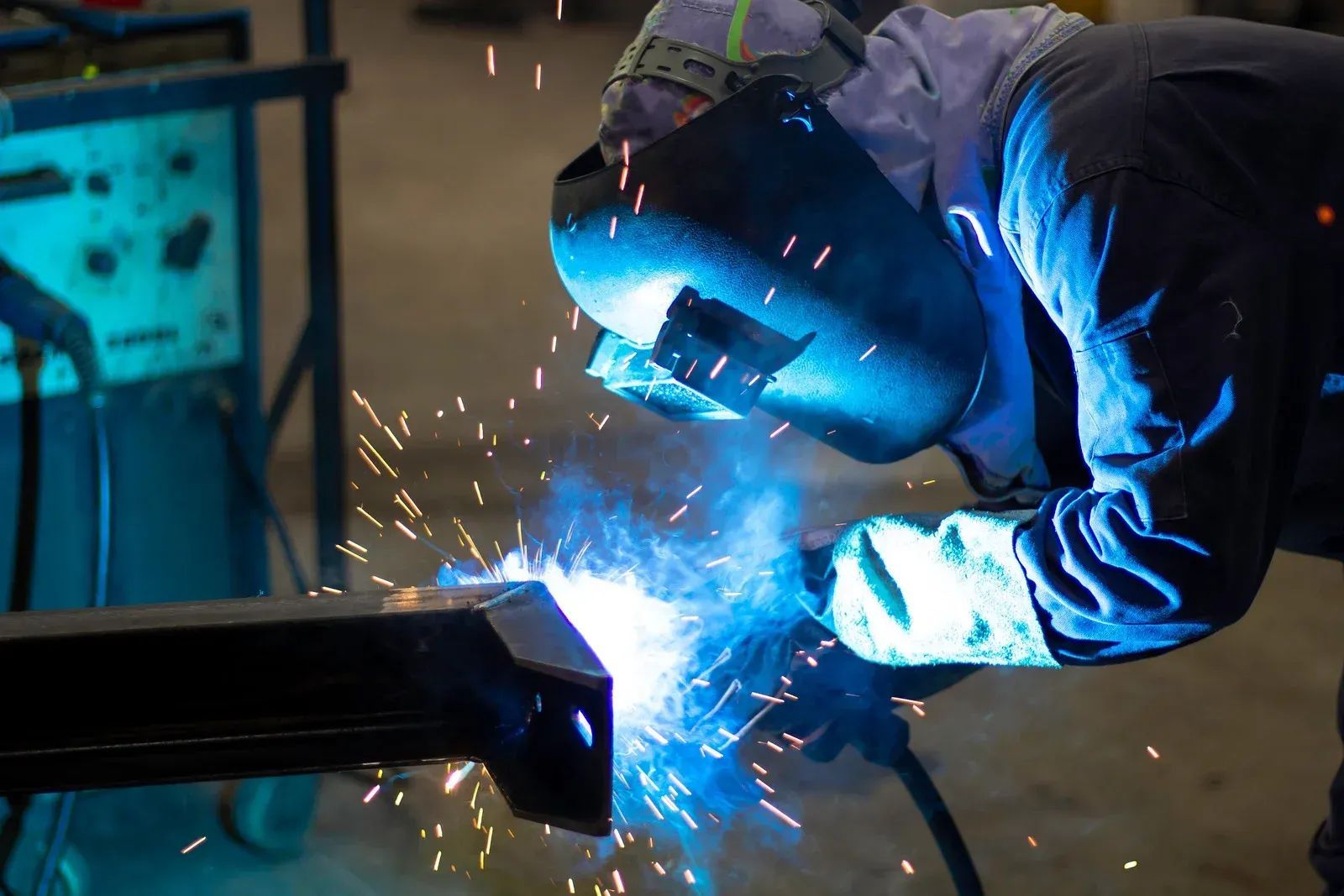
Welding, soldering, and surface treatment processes release volatile organic compounds (VOCs) and metal oxide fumes. These compounds react with sunlight and other atmospheric pollutants to form ground-level ozone, a key component of smog. In regions with already strained air quality, industrial VOC emissions from inadequately controlled facilities add measurable pressure to local atmospheric conditions.
Some fumes, particularly those from flux-core welding or processes involving coated metals, also release nitrogen oxides and carbon monoxide. Over time and at scale, these emissions contribute to acid rain formation and broader atmospheric degradation.
What Professional Collection Systems Actually Do
Source Capture vs. Ambient Filtration
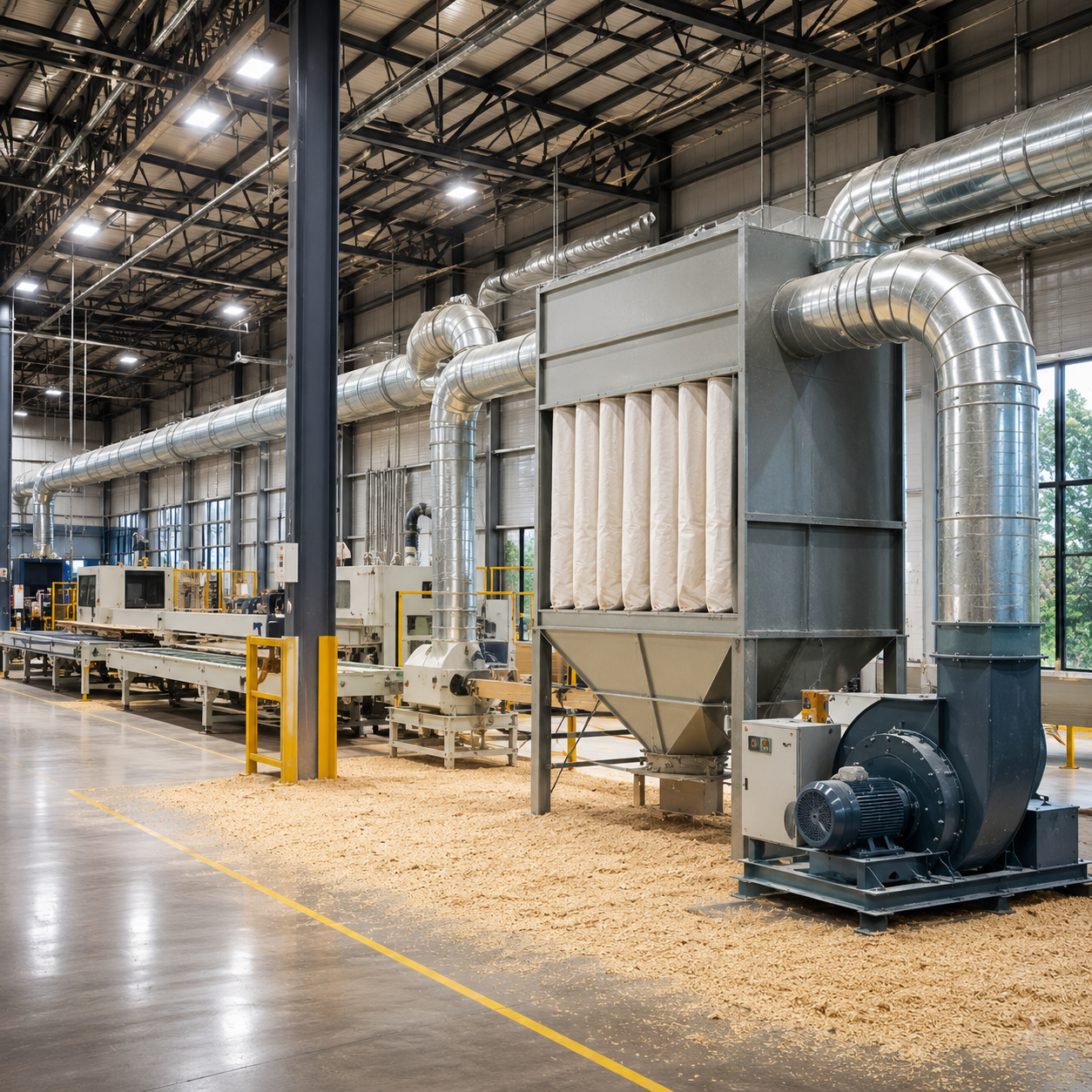
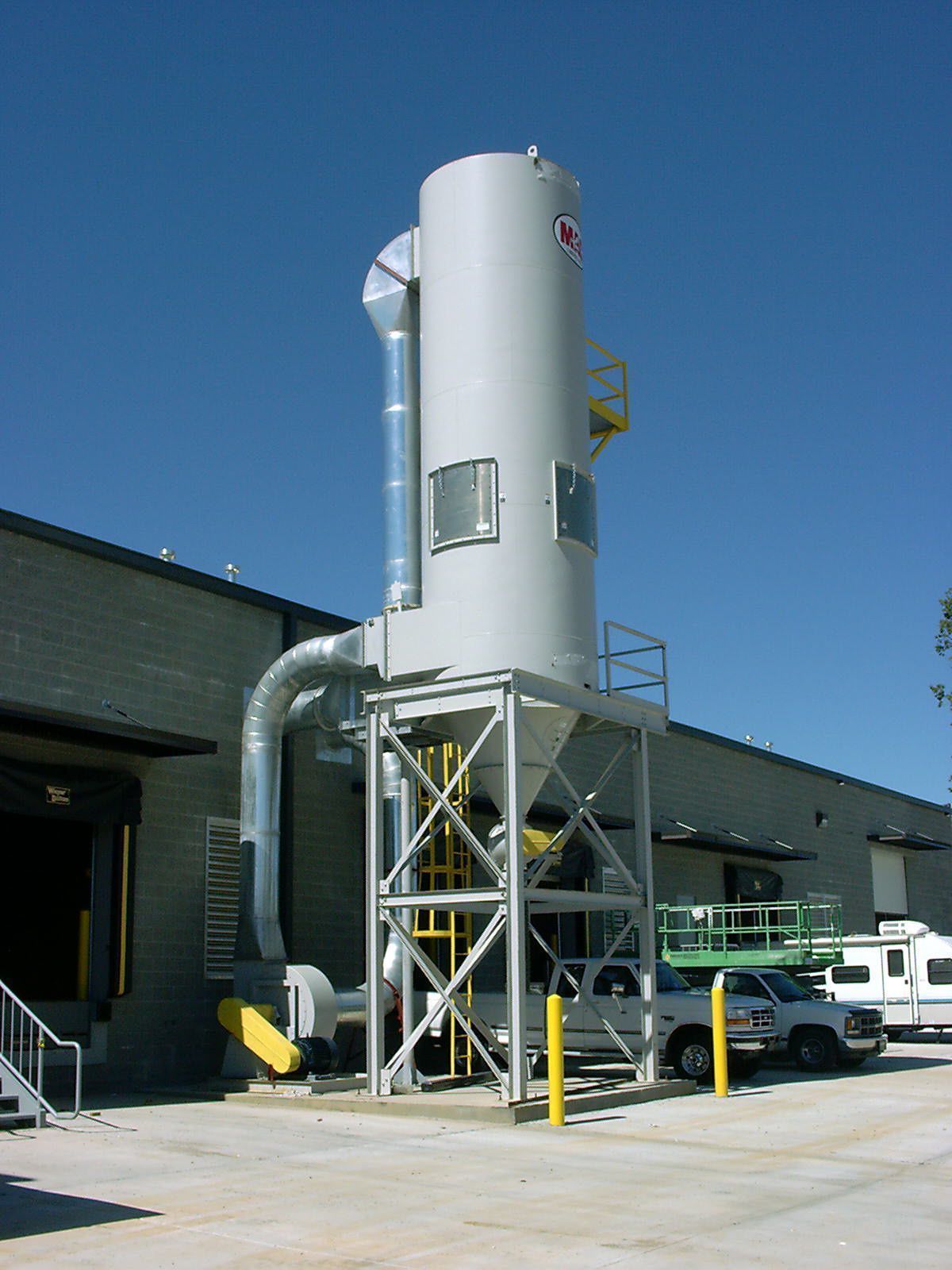
Professional dust and fume collection operates on two primary models. Source capture systems extract contaminants directly at the point of generation, using hoods, arms, and enclosures placed immediately adjacent to the work. Ambient filtration systems draw from the room at large through ceiling-mounted or wall-mounted units. In most industrial applications, a combination of both delivers the strongest environmental result.
Source capture prevents dispersion before it begins. When a welding fume arm is positioned correctly, the plume never reaches open air. This means collection efficiencies can reach 95 percent or higher at the point of generation, dramatically reducing what escapes into the broader facility or exits through general ventilation.
Filtration Technology and What Gets Captured
Modern collection systems use layered filtration designed to address particles at multiple size ranges. A typical industrial system includes:
| Filter Stage | Function | Target Particulate |
|---|---|---|
| Pre-filter | Captures large debris, extends filter life | Particles over 10 microns |
| Main cartridge or bag filter | Removes fine dust and metal particles | Particles 0.3 to 10 microns |
| HEPA final stage | Captures ultrafine and hazardous particles | Particles below 0.3 microns |
| Activated carbon layer | Adsorbs VOCs and chemical vapors | Gaseous compounds and odors |
When systems include carbon filtration or wet scrubbers appropriate to the fume chemistry, chemical compounds are neutralized rather than released. This prevents VOCs from reaching the atmosphere through facility exhaust stacks or general building ventilation.
Regulatory Compliance as an Environmental Baseline
OSHA, NFPA, and EPA Standards
Professional dust and fume collection aligns with multiple regulatory frameworks that exist specifically to protect environmental and public health. OSHA's permissible exposure limits (PELs) establish maximum airborne concentrations of hazardous substances in the workplace. EPA's National Emission Standards for Hazardous Air Pollutants (NESHAPs) govern what facilities may release into outdoor air. NFPA 652 and 654 address combustible dust, which carries both safety and environmental implications when uncontrolled dust ignites and releases contaminated smoke.
Meeting these standards requires collection systems that are properly sized, correctly specified for the contaminant type, and regularly maintained. Facilities that run undersized or poorly maintained collectors may pass inspections while still releasing quantities of fine particles that contribute to environmental degradation. Professional specification closes this gap.
Combustible Dust and Environmental Risk
Combustible dust explosions are a well-documented industrial hazard, but their environmental dimension receives less attention. When accumulated dust ignites, the resulting fire and explosion release large volumes of particulate matter, smoke, and unburned chemical compounds into the surrounding environment. Facilities handling aluminum, magnesium, wood, or certain metal powders face this risk when collection is inadequate. A properly designed collection system with explosion venting and suppression not only protects the facility but prevents these large-scale environmental release events.
Long-Term Environmental Impact of Systematic Collection
Waste Capture and Responsible Disposal
One underappreciated environmental benefit of professional collection is that captured material can be managed as solid waste rather than released as diffuse atmospheric pollution. Collected metallic dust from fabrication operations can, in many cases, be sent to recycling facilities rather than landfilled. Steel, aluminum, and copper dusts have material value that makes recovery economically viable.
This closed-loop approach converts what would otherwise be uncontrolled atmospheric contamination into a managed material stream. The volume involved at industrial scale is substantial. A medium-sized fabrication facility running multiple grinding and cutting operations can collect hundreds of pounds of metallic particulate per month. Without collection, that material disperses into the air, soil, and water of the surrounding area.
Reduced Load on Municipal Air Quality
Industrial districts concentrate multiple emission sources in proximity. Facilities that operate professional collection systems reduce their contribution to cumulative local air quality burden. In areas where regional air quality is monitored under EPA attainment standards, individual facility performance aggregates into the overall classification. Facilities that invest in high-performance collection contribute to keeping regions within attainment, which has direct implications for public health outcomes and environmental quality for communities surrounding industrial zones.
Strategic Maintenance Planning
On-site inspections allow for more strategic and effective maintenance planning across operations. Instead of reacting to sudden failures, we can implement scheduled maintenance based on actual equipment conditions. This approach reduces unnecessary servicing while ensuring critical components receive timely attention. Planned maintenance minimizes disruptions, improves efficiency, and ensures resources are allocated effectively, supporting long-term operational stability and improved performance across all systems.
Best Practices for Environmentally Responsible Collection
System Sizing and Airflow Engineering
An undersized system creates a false sense of security while allowing a significant fraction of generated contaminants to escape capture. Proper engineering begins with a thorough analysis of the processes being served, the volume of material generated, and the specific hazardous properties of the dust or fume involved. Capture velocity, duct design, and filter media selection must all match the application.
Filter Maintenance and Change-Out Protocols
Filters that operate beyond their service life lose efficiency and may allow breakthrough of fine particles. Scheduled maintenance with documented filter change-out protocols ensures the system performs as designed. Spent filters containing hazardous material must be handled and disposed of according to applicable regulations, treating them as the hazardous waste they contain rather than ordinary refuse.
Continuous Monitoring
Modern collection systems increasingly incorporate differential pressure monitoring, airflow sensors, and remote diagnostics. These tools provide real-time visibility into system performance, allowing operators to identify degradation before it results in meaningful emission increases. Continuous monitoring elevates collection from a passive infrastructure element to an active environmental management tool.
Proven Metal Fabrication Authority Rooted in North Carolina Communities
Professional dust and fume collection is one of the most direct mechanisms available to industrial facilities for reducing their environmental impact. From preventing heavy metal contamination of soil and water to reducing VOC contributions to regional air quality, the environmental benefits are specific, measurable, and cumulative over time. Properly specified systems capture material at the source, filter it through staged media designed for the contaminant profile, and convert diffuse atmospheric risk into managed solid waste streams. Regulatory compliance sets a floor, but facilities that treat collection as an environmental commitment rather than a minimum standard achieve meaningfully better outcomes for the surrounding community and natural environment. As environmental scrutiny of industrial operations increases, facilities that invest in professional-grade collection infrastructure are better positioned to meet emerging standards and demonstrate genuine environmental stewardship.
At Associated Metal Works, we have spent over 40
years serving metal fabrication customers across North Carolina and the broader Southeast, and environmental responsibility has been part of how we approach every project we take on. We understand the specific dust and fume challenges that metal fabrication environments create because we work inside those environments every day. Our experience spans grinding, welding, cutting, and finishing operations across facilities of every scale, and we bring that depth to every collection system we recommend, install, and maintain. When facilities work with us, they gain a partner who understands both the technical requirements of source capture and the regulatory landscape that governs industrial air quality in this region. We take pride in helping fabricators operate cleaner, safer shops that hold up under inspection and serve their communities well. If your facility is evaluating its current collection infrastructure or planning an expansion, we welcome the conversation.
Frequently Asked Questions
What types of dust are most hazardous from an environmental standpoint?
Metallic dusts containing chromium, manganese, lead, and nickel pose the greatest environmental risk due to their toxicity and persistence in soil and water. These particles accumulate in ecosystems rather than breaking down, making source capture critical for operations that generate them.
How does dust collection help facilities meet EPA air quality standards?
Professional collection systems reduce the volume of PM2.5, PM10, and VOCs that facilities release through their ventilation exhaust. Facilities operating properly sized and maintained systems are far less likely to exceed EPA National Emission Standards for Hazardous Air Pollutants applicable to their industry classification.
Can captured metallic dust be recycled rather than sent to landfill?
In many cases, yes. Metallic dusts from steel, aluminum, and copper fabrication operations have recoverable material value. Facilities working with certified recyclers can divert collected dust from landfill disposal, converting an environmental liability into a recoverable material stream.
What is the difference between source capture and ambient filtration?
Source capture removes contaminants at the point of generation before they disperse into the workspace or facility air. Ambient filtration cleans air that has already mixed throughout the room. Source capture achieves higher collection rates and is the preferred approach for hazardous fumes and fine metallic particulates.
How often should industrial dust collection filters be replaced to maintain environmental performance?
Filter service intervals depend on the volume of material collected and the specific filter media used. Most industrial applications require inspection at least quarterly, with replacement driven by differential pressure readings rather than fixed calendar intervals. Operating beyond the recommended pressure drop significantly reduces capture efficiency.