Material Handling Fan Vibrating or Losing Airflow? What It's Warning You About
September 19, 2026
QUICK ANSWER: A material handling fan that's vibrating or moving less air is almost never failing randomly — it's telling you something specific is already wrong upstream of a breakdown. Vibration usually traces back to dust or material buildup throwing the impeller off balance, a bearing wearing out from contamination or misalignment, or hardware working loose from constant motion. Dropping airflow with no unusual noise often points somewhere else entirely: eroded or damaged impeller blades, a slipping belt, or ductwork resistance that's crept up since the system was first balanced. The fix depends entirely on which of these is actually happening, which is why a diagnostic look at the fan — not a guess — is what actually stops the problem from coming back in six weeks.
You walk the line during your morning rounds, and something's off. The dust collector fan that's always been background noise now has a hum with an edge to it, or you can feel it through the ductwork when you rest a hand on the housing. Or maybe there's no noise at all — the fan sounds fine, but the collection hoods that used to pull hard now feel weak, and dust that used to disappear off the floor is starting to settle again. Either way, you've got a decision to make: log it and keep walking, or stop and figure out what's actually going on before the next shift finds out the hard way.
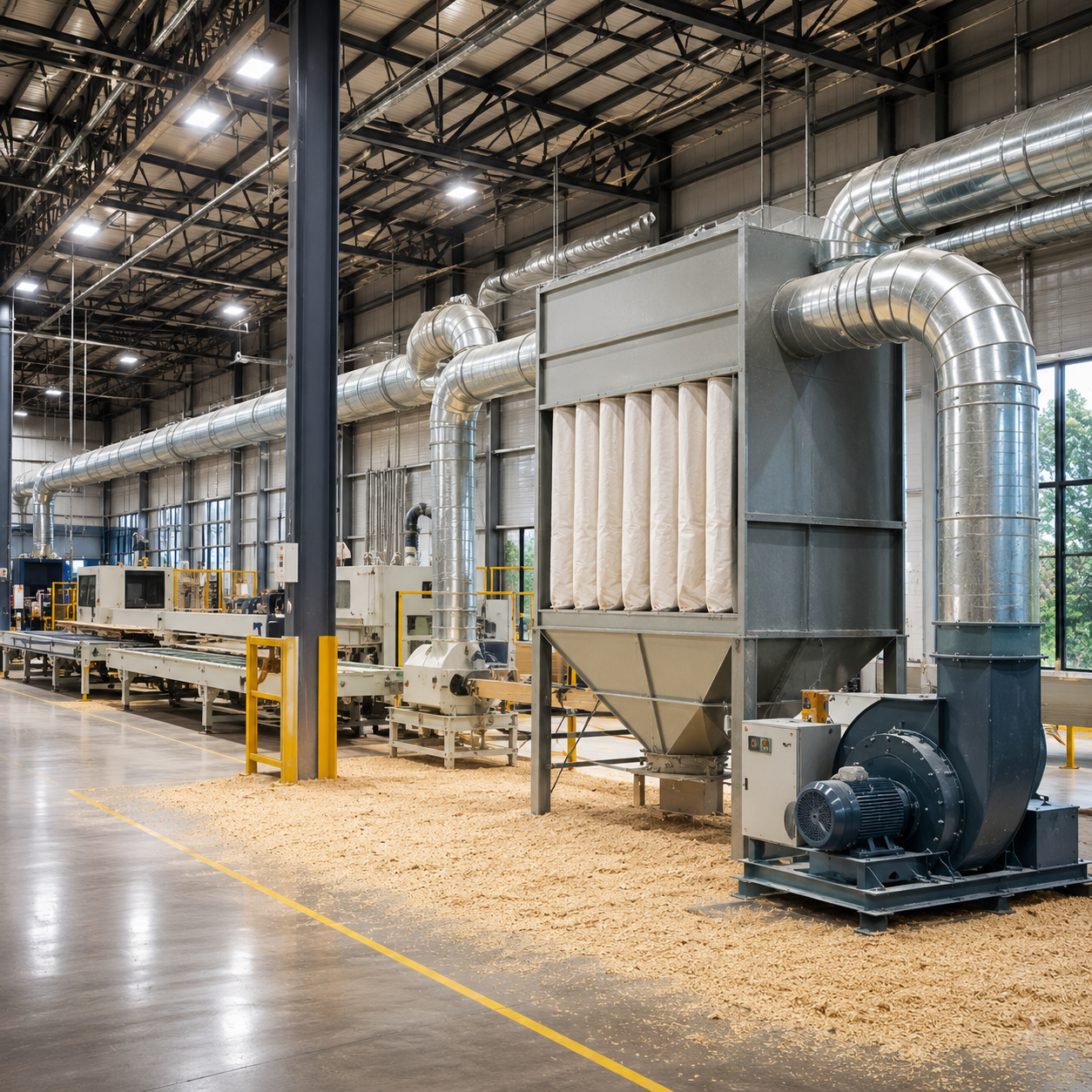
Material handling fans run harder than almost anything else in a dust or fume collection system. They spin continuously, move abrasive or fibrous material through the airstream, and take on load variations every time production ramps up or down. That constant work means they wear in predictable patterns — and those patterns show up as vibration or airflow loss well before the fan actually quits. The plants that catch it early treat the symptom as a diagnostic clue. The plants that don't end up explaining an unplanned shutdown.
Vibration and Airflow Loss Are Two Different Conversations
It's tempting to treat "the fan isn't right" as one problem, but vibration and airflow loss usually have different root causes, and mixing them up sends maintenance chasing the wrong fix.
A fan that's vibrating is almost always a mechanical story — something is out of balance, out of alignment, or coming loose, and the shaking is the physical evidence of that imbalance transmitting through the bearings and housing. A fan that's losing airflow without vibrating is more often an aerodynamic story — the blades, the belt, or the ductwork are no longer moving air the way they were engineered to, even though nothing is shaking loose. Some failures produce both at once, especially as they progress, but knowing which symptom showed up first narrows the list of suspects fast.
The Usual Suspects Behind a Vibrating Fan
Dust And Material Buildup On The Impeller
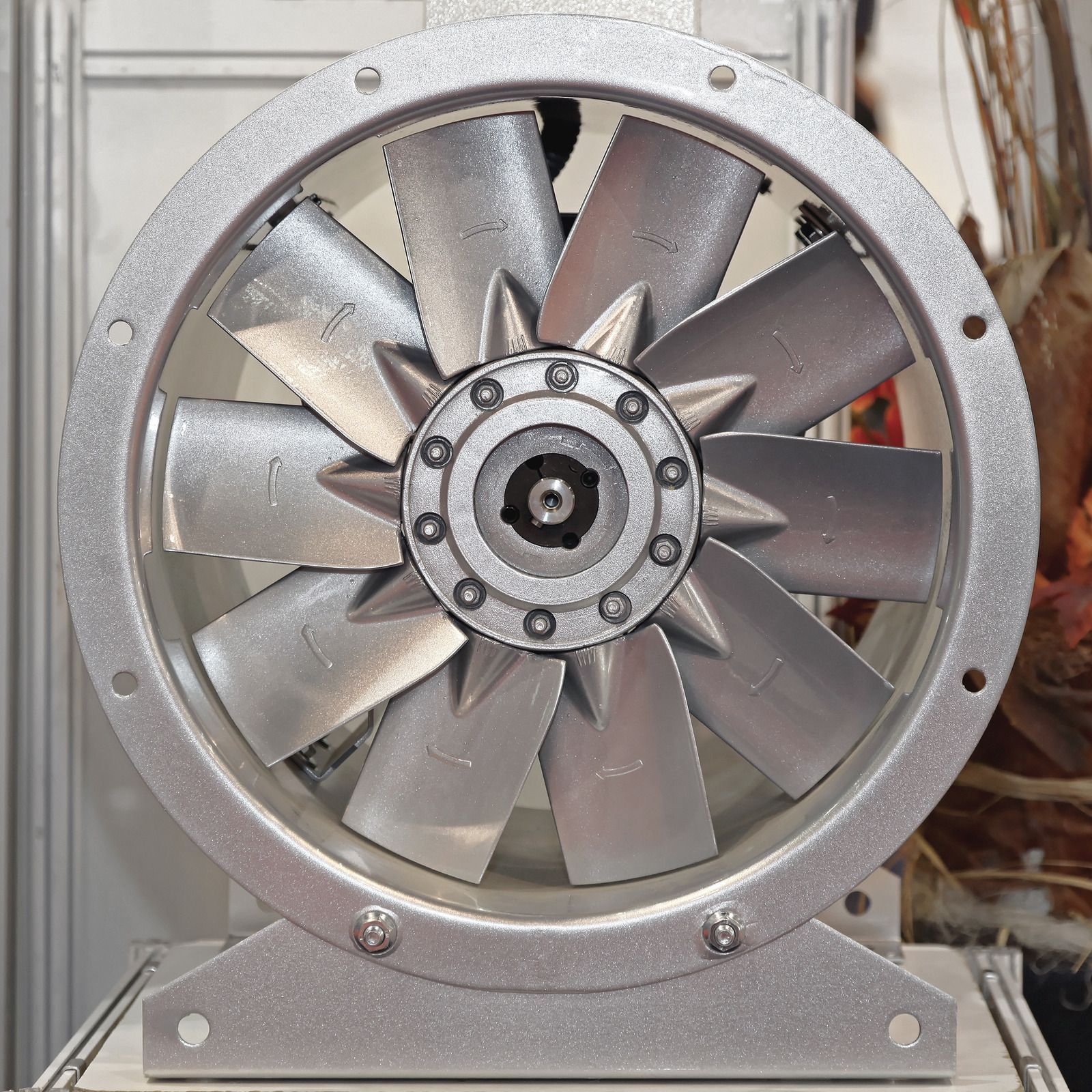
Dust, fines, sticky residue, or fibrous material can accumulate unevenly across an impeller, shifting its center of mass away from the shaft centerline. That imbalance creates a shaking force during every rotation, increasing with fan speed. Gradual buildup can therefore cause noticeable vibration even when no mechanical component has actually failed.
Bearing Wear
Bearings can develop vibration from inadequate lubrication, excessive grease, contamination, or increased loading. Too little lubrication creates friction and heat, while overgreasing restricts proper rolling. Dust entering through worn seals can damage races and rolling elements. An unbalanced impeller or misaligned shaft can also overload bearings, accelerating wear and premature failure.
Shaft Misalignment And Mechanical Looseness
Shaft alignment can change over time because of thermal expansion, foundation settling, worn couplings, or shifting equipment. Misalignment places uneven loads on shafts and bearings during operation. Loose mounting bolts or weakened foundation connections create additional movement. Even slight mechanical looseness can produce noticeable vibration throughout the fan assembly during operation.
TIP: Note down what a healthy fan feels and sounds like when it's running right — hand on the housing, ear near the bearing cap, a rough sense of the hum. That baseline is what makes it possible to say "this changed" with confidence instead of guessing, and it's the single fastest way to catch a developing problem before it becomes a shutdown.
When the Fan Is Quiet But the Airflow Still Drops
A fan can move less air without ever developing a noticeable shake, and this is the failure mode that gets missed most often because nothing sounds wrong.
Worn Or Eroded Impeller Blades
Abrasive materials gradually wear away impeller blade edges, changing their engineered aerodynamic profile. As the blades erode, the fan moves less air with each rotation despite maintaining its normal speed. Because this decline happens slowly, operators may not notice immediately, but weaker suction at hoods often becomes apparent months later.
Belt Slippage Or Wear On Belt-Driven Fans
Glazed, stretched, or worn belts can reduce power transfer between the motor and fan shaft, lowering impeller speed. Because centrifugal fan airflow depends heavily on rotational speed, even a modest RPM reduction can noticeably decrease air volume. The belt may therefore cause performance problems before its condition appears obviously severe.
Ductwork And System Resistance Creeping Up
Fans are designed around a specific system resistance created by ductwork, hoods, filters, and dampers. Increasing resistance from blocked filters, material buildup inside ducts, or shifted dampers restricts airflow even when the fan operates properly. The fan may test normally, while downstream restrictions prevent it from delivering its intended air volume.
Why Guessing Costs More Than Diagnosing
There's a common assumption on plant floors that vibration always means the impeller is out of balance, and it's wrong often enough to matter. Vibration analysis — looking at the actual frequency pattern the fan is producing, not just the fact that it's shaking — separates a true rotational imbalance from misalignment, bearing wear, and mechanical looseness, each of which shows up as a distinct signature to someone who knows how to read one. Skip that step and you're choosing a fix based on a hunch: rebalancing an impeller that was actually fine, when the real problem was a bearing three months from failing anyway.
That distinction matters because the fixes aren't interchangeable, and the wrong one buys you nothing. Rebalancing a fan that's shaking from bearing wear leaves the actual failing component in place — it'll still fail on its original schedule, just with a fresh balance job that didn't need doing. Replacing a bearing on a fan that's shaking from impeller imbalance solves nothing either, because the new bearing inherits the same uneven load the old one was carrying and starts wearing out just as fast. A proper diagnostic look — checking the impeller for buildup and erosion, checking alignment, checking the bearing condition directly rather than assuming — is what tells you which fix actually addresses what's wrong, instead of which one happened to be tried first.
WARNING: Don't keep a fan running through a shift once vibration has become noticeable through hand contact with the housing, or once you've heard a grinding or metallic sound that wasn't there before. A bearing that seizes under load can throw the shaft hard enough to damage the housing and the impeller in the same event, turning what would have been a scheduled bearing swap into a full fan rebuild — and a shaft failure at speed puts anyone standing nearby at real risk.
What Riding It Out Actually Costs You
The instinct to keep a fan running until the end of the shift, or until the next planned maintenance window, is understandable — stopping production for a fan that's technically still moving air feels like an overreaction. But every one of the causes above gets worse under continued load, not better. Buildup on an impeller doesn't redistribute itself back to even; it accumulates further and the imbalance grows. A bearing running hot under extra load isn't cooling down on its own; the wear compounds every hour it keeps turning. Worn blades don't regenerate their profile; the erosion continues at the same rate it's been running at, or faster if the material getting handled is more abrasive during a particular run.
There's also a cost that's easy to miss because it doesn't show up as a shutdown: a fan losing airflow quietly is a fan doing its job worse every day, which means dust and fume levels on the floor are climbing even while the fan itself keeps running. By the time collection performance is bad enough that someone notices without instrumentation, the system has often been underperforming for weeks. Catching the drop early, through routine airflow checks rather than waiting for a complaint, is what keeps a slow decline from becoming a visible problem on the floor.
Frequently Asked Questions
How much vibration on a material handling fan is actually a problem?
Any new vibration you can feel through the housing or frame is worth investigating, even if minor. Vibration tends to escalate quickly as the underlying cause progresses, so catching it early keeps the fix smaller.
Can a fan lose airflow without any change in vibration or noise?
Yes, and it's a commonly missed pattern. Blade erosion, belt slippage, and rising ductwork resistance can reduce airflow without producing vibration or unusual sound, so airflow should be checked directly rather than judged by ear.
Is dust buildup on the impeller something maintenance can clean, or does it need a technician?
Light, accessible buildup can sometimes be handled as routine maintenance. But once buildup causes measurable imbalance, cleaning it can temporarily worsen the vibration by shifting mass unevenly, so a proper rebalance is what resolves it.
How do you tell if a vibrating fan is a bearing problem or an impeller balance problem?
The two produce different vibration signatures. An imbalance issue shows a dominant vibration at the fan's rotational frequency, while bearing wear shows higher-frequency signatures layered on top, so guessing means paying for the wrong repair.
Does a fan that's losing airflow use more energy or less?
Generally more, not less. A fan fighting higher resistance, or one whose blades pull less air from wear, draws more current to maintain output, so rising amp draw signals a downstream problem, not the fan.
Should a fan get inspected on a schedule, or only when it starts acting up?
Waiting for symptoms means catching problems after they've developed, since buildup, wear, and drift are gradual. A scheduled inspection catches early signs, a warm bearing, light buildup, before any becomes noticeable vibration or lost airflow.
What a Fan's Warning Signs Are Really Saying
A material handling fan that starts shaking or losing airflow isn't failing at random. It's showing the effects of buildup, bearing wear, misalignment, or ductwork resistance that has crept up since the system was last balanced, and each cause leaves its own pattern for someone who knows where to look. The fan can't explain what's wrong; it simply runs the way its current condition allows, which is why reading that condition correctly matters more than guessing at a fix.
Associated Metal Works
has spent 40
years working on fans across North Carolina's manufacturing floors, and that history is what makes the difference between a fix that holds and one that doesn't. A technician who checks the impeller, the bearings, and the alignment together, rather than one at a time, finds the actual cause instead of the symptom that happened to show up first. That's the difference between a fan repaired once and a fan repaired repeatedly.