Production Line Down From a Failed Fan or Valve? How Emergency Service Gets You Running
August 29, 2026
QUICK ANSWER: When a material handling fan or rotary valve fails mid-shift, the line usually doesn't fail all at once — bearings run hot, a rotor starts dragging, or a seal begins leaking air well before the final seizure. A qualified emergency response starts with diagnostics to confirm which component actually failed and why, not just a swap. From there, technicians repair or fabricate a replacement on the spot when the OEM part isn't sitting on a shelf somewhere three states away, restore alignment, and get the line moving again — usually in hours, not the days a backordered part would cost you. The best emergency calls also flag whatever caused the failure in the first place, so you're not back on the phone in six weeks.
Emergency Fan and Rotary Valve Failure Response
You get the call at 6:40 in the morning. Line 2 is down, the fan on the dust collector has gone quiet except for a grinding noise nobody likes, and the shift supervisor already has three operators standing around with nothing to feed. Somewhere upstream, a rotary valve locked up overnight and nobody caught it until the hopper backed up. Either way, you're now the person who has to explain to a plant manager why production stopped, and the honest answer — "the fan bearing seized" or "the rotor jammed" — isn't going to satisfy anyone until the line is running again.
Fans and rotary valves fail more often than almost any other component in a material handling or dust collection system, and it's not because they're poorly built. They're the parts doing the most continuous mechanical work — spinning shafts, rolling bearings, rotors sweeping through housings dozens of times a minute — hour after hour, shift after shift, often in dusty or abrasive conditions that wear on seals and races faster than a clean environment ever would. When one of them finally quits, the question isn't whether you need help. It's how fast that help can actually get your line back.
What's Actually Failing When a Fan or Valve Goes Down
A fan doesn't usually die instantly, and neither does a rotary valve. Both give off warning signs first, even if nobody was listening for them.
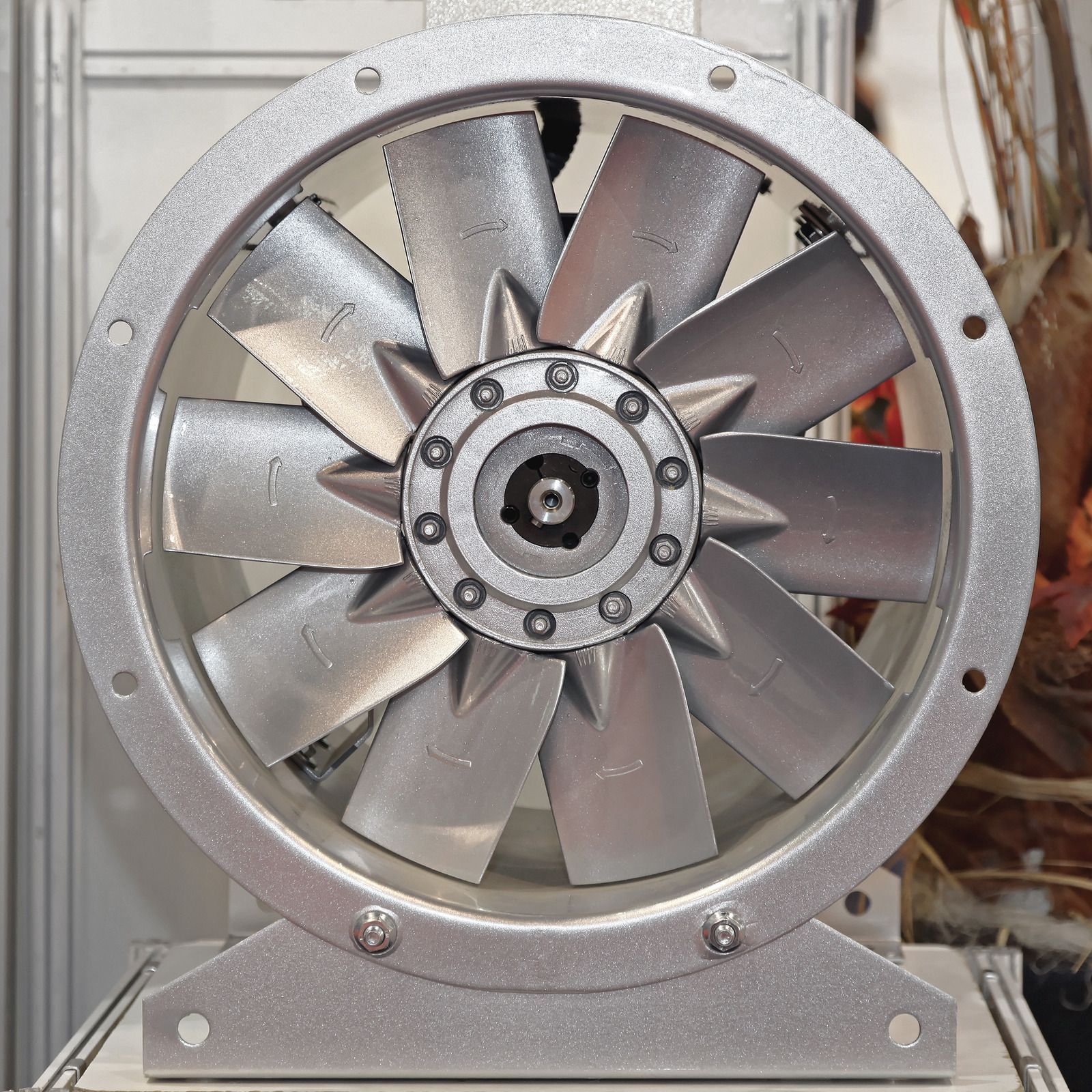
Fan failures almost always trace back to the bearings. Bearings are precision components built to run for years, but they're also the first thing to suffer when lubrication, contamination, or alignment goes wrong. Under-lubrication lets metal touch metal and generates the kind of friction that welds surfaces together on a microscopic level. Over-lubrication does damage a different way — it packs the bearing cavity so full that the rolling elements churn through grease instead of rolling freely, which builds heat and breaks the lubricant down. Add in airborne dust working its way past a worn seal, or a shaft that's been running slightly out of alignment since the last time someone serviced the motor, and you've got a bearing that's living on borrowed time. The industry sees the same handful of warning signs over and over — grinding or squealing that wasn't there last month, vibration you can feel through the housing, a section of the fan casing that's noticeably hotter than the rest.
Rotary valve failures show up as noise, wear, or leakage, usually in that order. A rotor that isn't centered in its housing starts grinding against the casing. Abrasive material — grain dust, fly ash, metal fines, whatever the process is moving — erodes the rotor tips and the housing bore a little more every shift until the clearances that used to be tight are suddenly loose enough to let material or air bypass the seal. Once that happens, the valve stops metering material consistently, and depending on the system, that can mean anything from a starved process downstream to a hopper backing up and shutting the whole line down. Damaged seals and warped housings from heat or abrasive wear follow the same pattern: small problem, ignored for a few weeks, sudden and total failure at the worst possible moment.
Here's the part most plant floors get wrong: they treat the fan and the valve as isolated components instead of asking what stressed them into failing. A fan bearing that keeps failing every few months usually isn't a bad bearing — it's a misaligned shaft, an unbalanced impeller loaded with dust, or a duct run putting more back-pressure on that fan than it was ever sized to handle. A rotary valve that keeps wearing out fast isn't unlucky. It's handling a more abrasive material than it was specified for, or it's running with clearances that were never adjusted after the first rebuild. Emergency service that only replaces the failed part and walks away leaves that root cause sitting there, waiting to take the next one down too.
What a Real Emergency Response Actually Looks Like
The gap between "someone shows up" and "someone fixes it" is bigger than most facilities realize until they're standing in it.
Diagnostics come first, even under pressure
It's tempting to just swap the obviously broken part and move on, but a rushed swap without knowing why the original part failed just restarts the clock on the same failure. A proper emergency response starts with figuring out whether you're looking at a bearing problem, an alignment problem, a material-compatibility problem with the rotor, or something upstream feeding stress into the component that failed. That diagnosis takes minutes, not hours, when the technician has seen the failure pattern before — but skipping it is how facilities end up calling back in three weeks.
When the part isn't on the shelf, fabrication happens on the spot
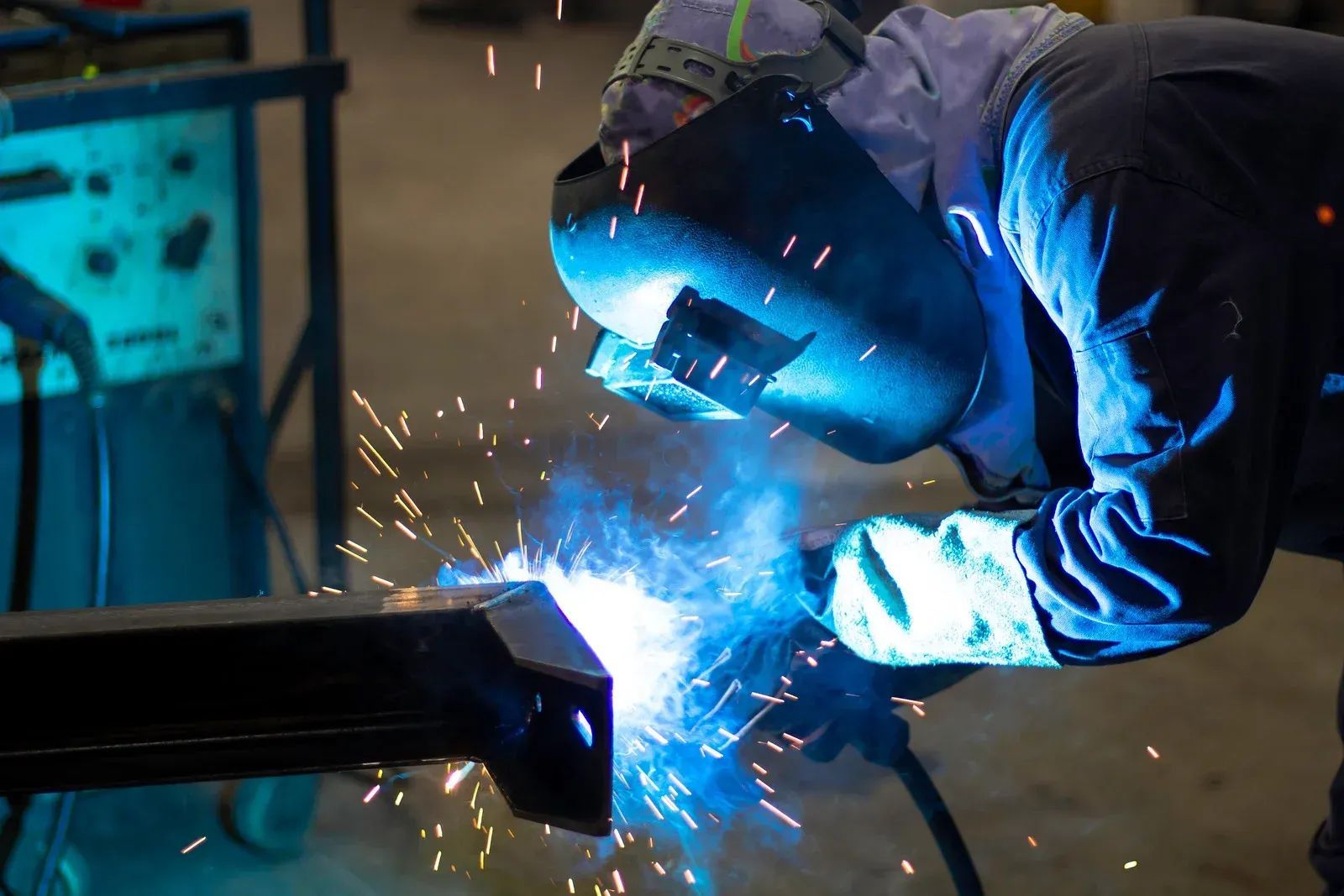
This is where a lot of emergency calls stall out. The OEM part is backordered, the manufacturer discontinued that fan housing a decade ago, or the rotary valve is a legacy unit nobody stocks parts for anymore. Waiting on a supplier can mean days of lost production instead of hours. A shop with in-house fabrication and welding capability can build the replacement component — a housing section, a rotor, a shaft coupling, a mounting bracket — to the tolerances the system actually needs, instead of leaving the line down while a part ships from out of state.
Alignment and restoration matter as much as the repair itself
Bolting a rebuilt fan back onto a base that's slightly out of level, or reinstalling a rotary valve without checking that the drive coupling lines up cleanly, sets up the next failure before the line even restarts. Restoring proper alignment and calibration is part of the job, not an optional extra step, because a component that goes back in misaligned is already counting down toward another breakdown.
TIP: Before an emergency call ever comes in, write down the baseline sounds and temperatures your fans and valves run at when everything's healthy. A maintenance tech who can say "that bearing housing normally runs warm to the touch, not hot enough to make you pull your hand back" gives a responding technician a real starting point instead of a guess, and that shaves real time off diagnosis.
Around-the-clock availability is what actually separates emergency service from a regular repair call
A failed fan at 2 a.m. on a Saturday doesn't wait for Monday, and neither should the response. Facilities running multiple shifts or continuous processes need a partner who treats a 2 a.m. call the same as a 2 p.m. one — same diagnostic rigor, same fabrication capability, same commitment to getting the line back before the next shift walks in.
Why Waiting Costs More Than the Repair Ever Will
Plant managers already know downtime is expensive. What tends to surprise people is how much more expensive it's gotten. Industry surveys of manufacturing plant leaders have found that two-thirds of facilities deal with unplanned downtime at least once a month, and average unscheduled downtime now costs an estimated $125,000 an hour across surveyed plants — a figure driven up by higher material, labor, and energy costs stacking on top of the lost production itself. Separate research tracking the world's largest manufacturers found unscheduled downtime eating roughly 11 percent of annual revenue, nearly double what it was costing the same companies five years earlier. The number that matters for your plant is smaller than that, obviously, but the direction is the same: every hour a fan or valve sits broken costs more today than it did last year, and it keeps climbing.
That's the real argument for calling in emergency service the moment a fan or valve shows real trouble, rather than trying to nurse it through the shift. A bearing that's already grinding is not going to heal itself by running lighter or slower. A rotary valve that's leaking air past worn seals is not going to reseal itself. Every hour spent hoping a failing component makes it to the end of the week is an hour where the underlying wear gets worse, and where the eventual repair — or the collateral damage to whatever's downstream of that fan or valve — gets bigger.
WARNING: Never run a fan or rotary valve past the point where you've noticed a real change in noise, vibration, or temperature just to finish out a shift. A bearing that seizes mid-rotation can throw the shaft or damage the housing badly enough to turn a same-day repair into a multi-day rebuild, and a jammed rotor under load can put enough torque through the drive coupling and gearbox to take out components well beyond the valve itself.
After the Fix: Making Sure It's the Last Emergency Call for a While
A good emergency response doesn't end when the line starts moving again. The technician who diagnosed a bearing failure caused by shaft misalignment, or a rotor wearing fast because it's handling a more abrasive material than it was speced for, should tell you that — not just hand you an invoice and leave. That information is what turns a one-time fix into a system that actually holds up.
This is also where the case for a scheduled on-site inspection after any emergency repair gets strong. A fan or valve that just failed under stress is exactly the component you want a second set of eyes on a few weeks later, checking that the repair held, that alignment stayed true under real operating load, and that nothing else on that line is showing the early signs of the same kind of wear. Facilities that treat every emergency as an isolated event tend to see the same failures again. Facilities that use the emergency as a diagnostic moment — what failed, why it failed, what else might be at risk — tend to stop getting the 6:40 a.m. phone calls.
Frequently Asked Questions
How fast can a fan or rotary valve actually get repaired during an emergency call?
Many repairs can be completed within hours when technicians diagnose the failure quickly and fabricate unavailable components. Repair time ultimately depends on damage severity, equipment condition, and replacement requirements.
Is it ever safe to keep running a fan or valve that's making unusual noise until the end of the shift?
Generally, no. Grinding, squealing, or unusual vibration can indicate developing mechanical failure. Continuing operation may worsen bearing, shaft, rotor, gearbox, or housing damage and significantly increase repair requirements and downtime.
What's the difference between a repair and a rebuild for a fan or rotary valve?
A repair replaces or corrects the specific failed component. A rebuild restores the entire fan or valve, addressing bearings, seals, alignment, clearances, and other worn parts to reliable operating condition.
Why does the same fan or valve keep failing even after it's been fixed?
Repeated failures often indicate an unresolved underlying problem, such as shaft misalignment, excessive vibration, abrasive materials, improper clearances, or imbalance. Identifying and correcting that root cause helps prevent recurring equipment breakdowns.
Can a custom part really be fabricated fast enough to matter during a shutdown?
Yes. In-house fabrication can eliminate lengthy waits for unavailable OEM components. Technicians may machine shafts, repair housings, or fabricate replacement parts quickly, significantly reducing downtime during critical production shutdowns.
Should every emergency repair be followed up with an inspection?
Yes, especially after equipment fails under operating load. A follow-up inspection confirms repairs remain stable, verifies alignment and performance, and identifies developing wear or system stresses before another unexpected shutdown.
Keeping Production Moving After Critical Equipment Failures
A failed fan or rotary valve can bring production to a sudden stop, but the disruption does not have to become an extended shutdown. Accurate diagnostics, proper alignment, and skilled fabrication can address both the immediate failure and the conditions that caused it. With 40+ years of experience, Associated Metal Works supports industrial facilities across North Carolina with practical knowledge of material handling equipment, helping restore dependable operation while reducing the likelihood that the same mechanical problem returns unexpectedly.
The strongest
emergency repairs
look beyond the damaged bearing, rotor, seal, or housing and consider how the entire system is operating under normal production loads. Identifying excessive vibration, abrasive wear, alignment problems, or unusual material demands provides useful information for future maintenance decisions. Once repairs are completed and operating conditions are verified, facilities can return to production with greater confidence in their equipment. That broader approach helps turn an unexpected shutdown into an opportunity for improved long-term reliability.