Off the Shelf Part Doesn't Fit Your Process? How Custom Fabrication Solves It
October 15, 2026
QUICK ANSWER: When a catalog part does not fit your process, the problem is rarely the part itself. It was built for a general use case, so its dimensions, material, mounting points, and tolerances were chosen for an average plant, not yours. Custom fabrication reverses that order. The piece is designed from your equipment, your material, and your floor layout, then cut, formed, and welded to match. The result is a part that installs without field modification, holds up to the wear it actually sees, and does not need a workaround bolted on after the fact.
You ordered the part on Monday and it showed up on Thursday. By Friday your maintenance lead is standing at the machine with a grinder, a torch, and a stack of shims, trying to make a flange line up with a bolt pattern that is off by a quarter inch. The part is the right size on paper. It just is not the right size for your equipment, and the line is waiting while someone decides how much metal to remove.
Plant managers across the Carolinas, Virginia, Tennessee, and Georgia run into this more often than most vendors admit. A catalog is built around volume, so every part in it is a compromise between many customers. If your process happens to sit in the middle of that compromise, the part works. If it does not, you end up modifying a standard piece, and a modified standard piece is almost always weaker, less accurate, and harder to maintain than one that was built correctly from the start. Here is what is actually going wrong and how custom fabrication fixes it at the source.
Why Standard Parts Almost Fit but Never Quite Do
A standard part is designed to a range. A hopper, a chute, a guard, a duct transition, or a mounting bracket is sized to cover as many installations as possible, which means its dimensions land close to many applications and exactly on very few of them. When yours is one of the few it misses, the gap shows up in three places.
The Geometry Is Slightly Wrong
Inlet sizes, flange patterns, bend angles, and lengths may not match existing equipment. Forced bends and modified mounting holes create alignment problems and vibration.
The Material Is A General Purpose Choice
Catalog parts often use standard materials unsuitable for abrasive, wet, or high-temperature processes. Premature wear develops where operating conditions place the greatest stress.
The Mounting Assumes A Layout You Do Not Have
Standard components require clearance that crowded plants cannot provide. Improvised supports compensate for poor fit, creating undocumented structures and potential stability problems.
TIP: Before you reorder any part that has needed field modification, photograph the modified piece and measure what was changed. That record is the closest thing to a free drawing of what the part should have been, and a fabricator can build from it directly instead of starting from the catalog dimensions again.
What Field Modification Quietly Takes From You
Every field modification spends time you did not plan for. Cutting, grinding, and rewelding a purchased part on the floor pulls a maintenance technician off scheduled work, and it happens at the worst moment, because the line is usually stopped while the part gets forced into place.
The quality problem is quieter. A weld made quickly on a finished part, often without the preparation or the fixturing a fabrication shop would use, tends to be the weakest point in the assembly. Heat from a field weld can also distort a thin section, and a part that was square when it arrived may no longer be square when it is installed. You then see the symptoms weeks later as a leak at a seam, a guard that rattles, or a chute that has started to bind.
There is also a documentation problem. A modified catalog part no longer matches its part number. The next person who orders a replacement gets the unmodified version, and the cycle starts over with nobody remembering what was changed the first time. Over a few years, a plant can accumulate dozens of these one off adaptations, each one quietly different from the drawing.
What Custom Fabrication Does Differently
Custom fabrication starts from the opposite end. Instead of asking which catalog item comes closest, the first question is what your process actually needs the part to do.
It Begins With Measurements From Your Equipment
Fabricators measure actual bolt patterns, clearances, and material flow, creating components that fit existing equipment without forcing operational changes or installation compromises.
It Lets You Choose The Material For The Job
Select steel, stainless steel, or aluminum based on abrasion, moisture, heat, and chemical exposure. Appropriate thicknesses, wear plates, and liners extend component service life.
It Builds Fit Into The Part
Custom cutting and forming align inlets, outlets, flanges, and mounting points precisely. Accurate fabrication simplifies installation and reduces adjustments during scheduled shutdowns.
Four decades of this work out of Harmony, North Carolina has meant building structural pieces, sheet metal components, guards, hoppers, and equipment repairs for manufacturers who needed something their supplier catalogs did not list. The common thread across those jobs is that the part was drawn around a real problem, not pulled from a shelf and bent to approximate one.
Where Custom Work Pays Off Most
Not every part needs to be custom. A standard fastener or a common fitting is usually the right call. The cases where custom fabrication earns its place tend to share a few traits.
The Part Touches Material That Wears
Chutes, hoppers, transitions, and diverters face constant abrasion. Custom fabrication with appropriate thickness and replaceable wear surfaces extends service life across demanding production cycles.
The Part Interfaces With Equipment That Is No Longer Made
Older machines often have obsolete mounting points. Custom fabrication reproduces exact interfaces while allowing improvements such as reinforced gussets and stronger weld profiles to prevent recurring failures.
The Part Has To Fit Into A Tight Space
Retrofits and relocations leave limited clearance for standard components. Custom parts accommodate obstructions, fit through narrow doorways, and provide reinforcement for unusual loading angles.
The Part Is Part Of A Larger System
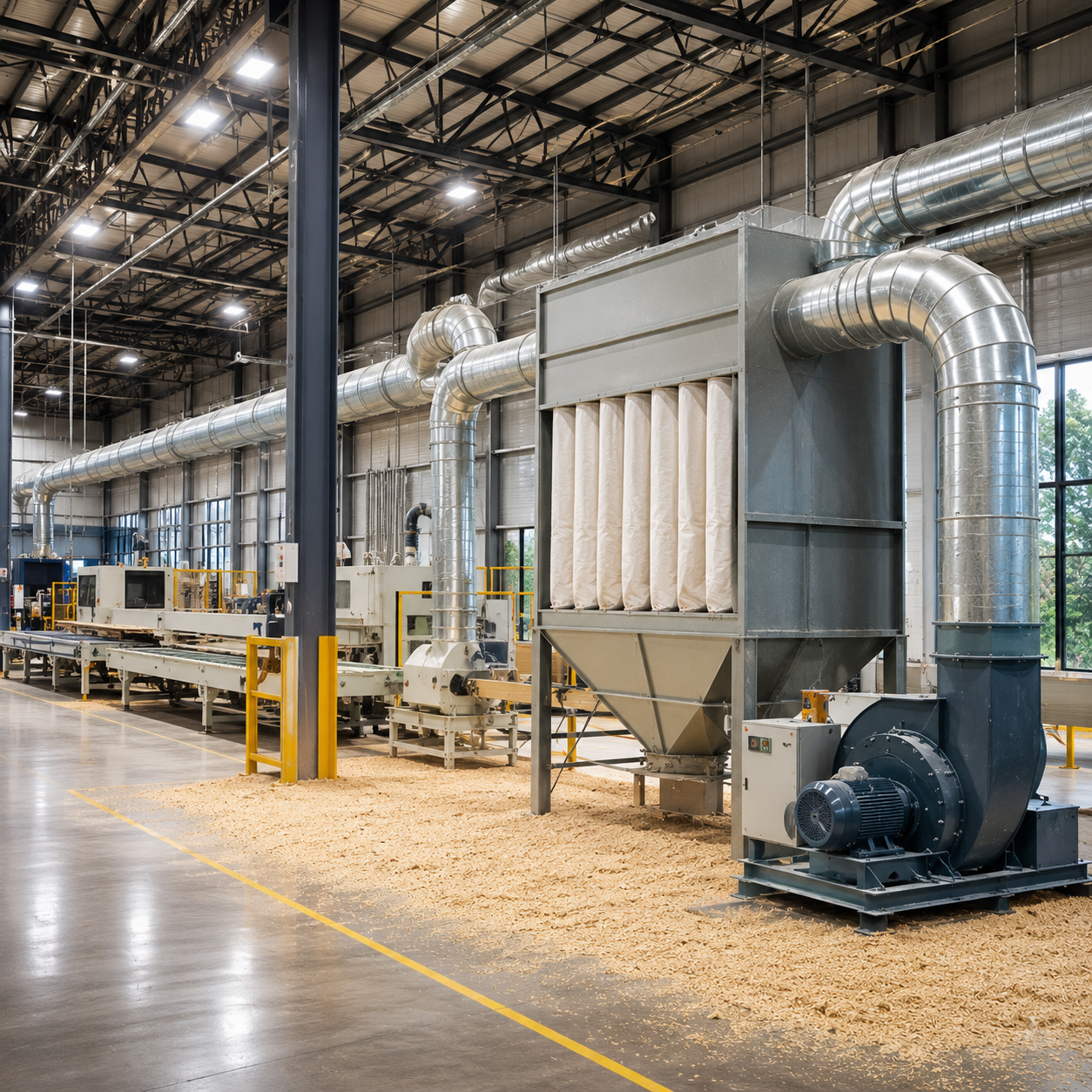
Ductwork, platforms, and support structures depend on precise connections. Coordinated fabrication ensures components align correctly, simplifies installation, and helps systems perform according to design specifications.
WARNING: Do not weld, cut, or heat a pressure rated, structural, or load bearing part in the field unless the base material and the intended load are known. A field repair that looks sound can lose strength in the heat affected zone around the weld, and a part that fails under load can injure the person standing beside it as well as damage the equipment it was holding.
Cutting and Welding Methods That Make the Difference
The way a custom part is made matters as much as the fact that it is custom. Two details tend to separate a piece that holds up from one that does not.
Cut Quality Sets Up Weld Quality
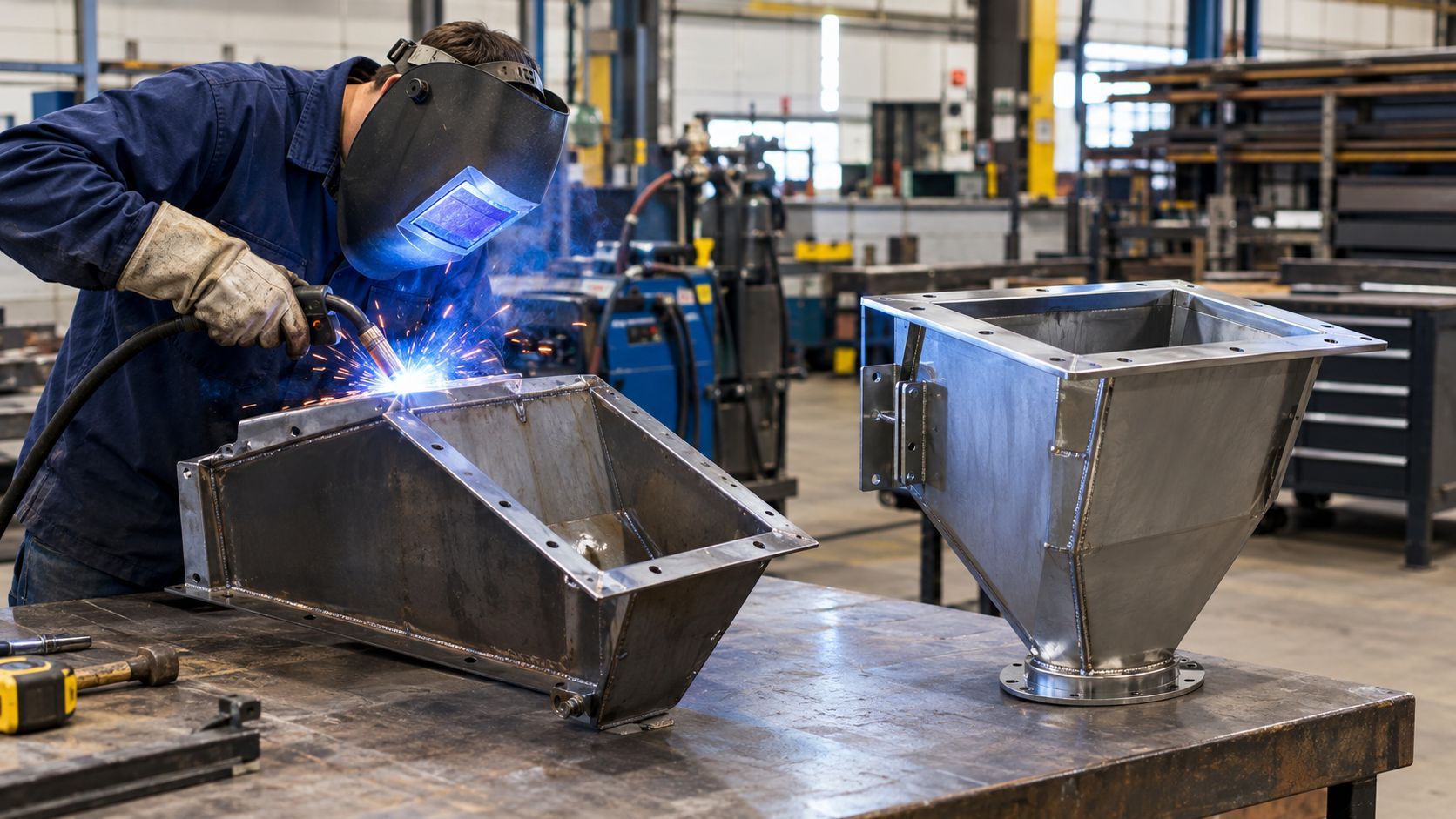
Accurate cuts create tight-fitting joints with consistent gaps, reducing rework. CNC and laser cutting maintain precise tolerances, ensuring every component matches specifications throughout production runs.
Welding Technique Has To Suit The Material
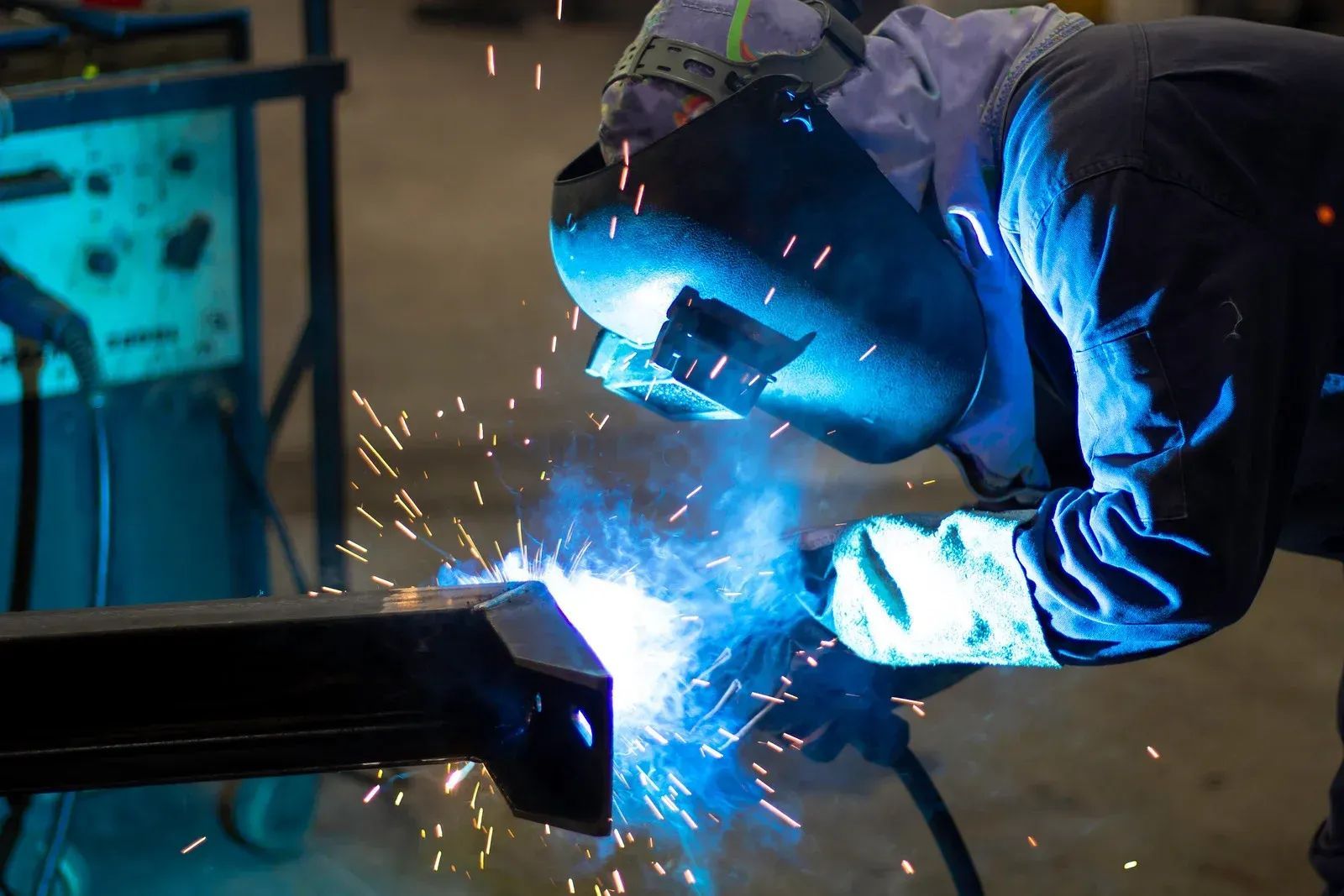
Carbon steel, stainless steel, and aluminum require specific fillers, heat control, and preparation. Qualified welders following established procedures and inspections prevent contamination and material damage.
For parts that are not easy to move, mobile welding brings the work to the equipment. Repairs, modifications, and installations done on site avoid hauling a large assembly back and forth, and the fabricator can verify the fit against the machine itself.
How to Hand a Fabricator What They Need
A custom part goes faster and comes out better when the request includes the right information. You do not need finished drawings. You need a clear picture of the problem.
Start with the equipment the part connects to, including model numbers and any available drawings. Add photographs from several angles, and measure the key dimensions twice. Describe what the part does, what material or product touches it, and how hot, wet, or abrasive the environment is. Mention how the old part failed, since a cracked weld, a thinned wall, and a bent flange each point to a different fix. If a catalog part has been modified in the field, send it along, because the modifications are the clearest record of what the plant really needed.
It also helps to tell the fabricator about your schedule. Project timelines vary with the size and complexity of the work. Smaller jobs can move in a matter of days, and larger or more complex ones take several weeks, so planning the order against a scheduled shutdown gives everyone room to do it properly.
Frequently Asked Questions
When is a catalog part good enough, and when should I go custom?
Catalog parts work when they fit unmodified, suit the process, and mount in your layout. Cutting, grinding, shimming, or rewelding to fit, or premature wear, signals that custom is better.
Can a fabricator work without a drawing?
Yes. A good fabricator can work from the old part, a sample, photographs, and field measurements. Drawings speed things up, but many jobs start with a broken piece and a description.
What materials can custom parts be made from?
Common choices include carbon steel, stainless steel, aluminum, and sheet metal in various thicknesses. The best pick depends on abrasion, moisture, temperature, chemical exposure, and the load carried.
How long does a custom fabrication job take?
It depends on size and complexity. Smaller parts can take a few days, while large assemblies may take several weeks. Sharing your shutdown date early helps the fabricator plan.
Will a custom part match my existing equipment exactly?
That is the goal. The fabricator builds from your real bolt patterns, flange sizes, and clearances, so every connection point lines up, and the fit can be verified before shipping.
Can repairs and modifications be done at my plant?
Yes. Mobile welding allows repairs, modifications, and installations on site, which helps with large assemblies or anything difficult to remove and transport.
Building Parts Around Your Process First
The pattern is easy to spot once you look for it. A part arrives, it almost fits, someone modifies it in the field, and a few months later it becomes the thing that fails. Custom fabrication breaks that chain by starting with the process. The piece is measured, drawn, cut, and welded to match the equipment it serves, in a material chosen for the conditions it will face. It installs cleanly, holds up where the old one wore through, and can be reordered from a drawing that matches reality.
Associated Metal Works
has built structural pieces, guards, hoppers, and equipment repairs in North Carolina for 40+ years, and that history shows in how each part is approached. Working from real bolt patterns, clearances, and material flow keeps the fit accurate, while the right steel, stainless, or aluminum keeps wear in check. Manufacturers end up with parts that install the way they were drawn and last well beyond the first season.